

Outdoor Therapy in Phoenix, AZ
Outdoor Therapy in Phoenix, AZ
Nature-Based Support for Trauma, Stress, and Feeling Stuck
There are seasons when sitting across from someone in a traditional therapy office does not feel like the right way to begin.
Maybe you know you need support, but the idea of talking directly about everything feels overwhelming. Maybe you have tried to think your way through trauma, anxiety, grief, burnout, relationship stress, or a major life transition, yet keep finding yourself caught in the same patterns.
Outdoor therapy offers a different kind of space—one that can feel steady, grounded, open, and connected to the world around you.
Outdoor Therapy in Phoenix, AZ
Nature-Based Support for Trauma, Stress, and Feeling Stuck
There are seasons when sitting across from someone in a traditional therapy office does not feel like the right way to begin.
Maybe you know you need support, but the idea of talking directly about everything feels overwhelming. Maybe you have tried to think your way through trauma, anxiety, grief, burnout, relationship stress, or a major life transition, yet keep finding yourself caught in the same patterns.
Outdoor therapy offers a different kind of space—one that can feel steady, grounded, open, and connected to the world around you.
Outdoor Therapy in Phoenix, AZ
Nature-Based Support for Trauma, Stress, and Feeling Stuck
There are seasons when sitting across from someone in a traditional therapy office does not feel like the right way to begin.
Maybe you know you need support, but the idea of talking directly about everything feels overwhelming. Maybe you have tried to think your way through trauma, anxiety, grief, burnout, relationship stress, or a major life transition, yet keep finding yourself caught in the same patterns.
Outdoor therapy offers a different kind of space—one that can feel steady, grounded, open, and connected to the world around you.

At Echo Canyon Therapy, I provide outdoor therapy in Phoenix, AZ for adults seeking a less clinical and more natural setting for counseling. Sessions may include walking, sitting outside, reflective conversation, mindfulness, grounding, nervous system support, and EMDR-informed therapy when appropriate.
The goal is not to hike farther, perform, push through, or force yourself to talk before you are ready. The goal is to create enough safety and steadiness that meaningful change has room to begin.
If you are carrying trauma, anxiety, chronic stress, relationship concerns, or a sense that you have lost touch with yourself, you are not broken. Your system may simply be asking for a different pace, a different environment, and a different kind of support.
When Life Starts to Feel Too Tight
Many people begin therapy after spending a long time trying to handle everything on their own.
You may appear capable and high-functioning while feeling exhausted underneath. You might continue meeting the demands of work, family, relationships, and daily life while noticing that part of you feels tense, distant, shut down, restless, or constantly prepared for something to go wrong.
Outdoor counseling may be a good fit when you:
Feel disconnected from your body or emotions
Spend a lot of time overthinking or anticipating problems
Have experienced trauma, grief, loss, or chronic stress
Feel restless, anxious, numb, overwhelmed, or burned out
Feel uncomfortable in a traditional therapy office
Find that walking, nature, or open spaces help you feel more present
Understand your patterns intellectually but struggle to change how they feel
Want support navigating a major life transition or relationship concern
Healing does not always begin with finding the perfect words. Sometimes it begins by noticing your breath, feeling your feet against the ground, or realizing that you do not have to hold everything quite so tightly.
What Is Outdoor Therapy?
Outdoor therapy is professional counseling conducted in an outdoor setting rather than exclusively inside an office or over video.
It may include walk-and-talk therapy, sitting together in nature, mindfulness exercises, grounding practices, trauma-informed counseling, reflective conversation, or EMDR-informed work. The structure depends on your needs, treatment goals, physical comfort, and preferences.
Outdoor therapy is still therapy. It includes clear boundaries, intentional treatment goals, privacy-conscious planning, and thoughtful clinical support. What changes is the setting and the way the work can unfold.
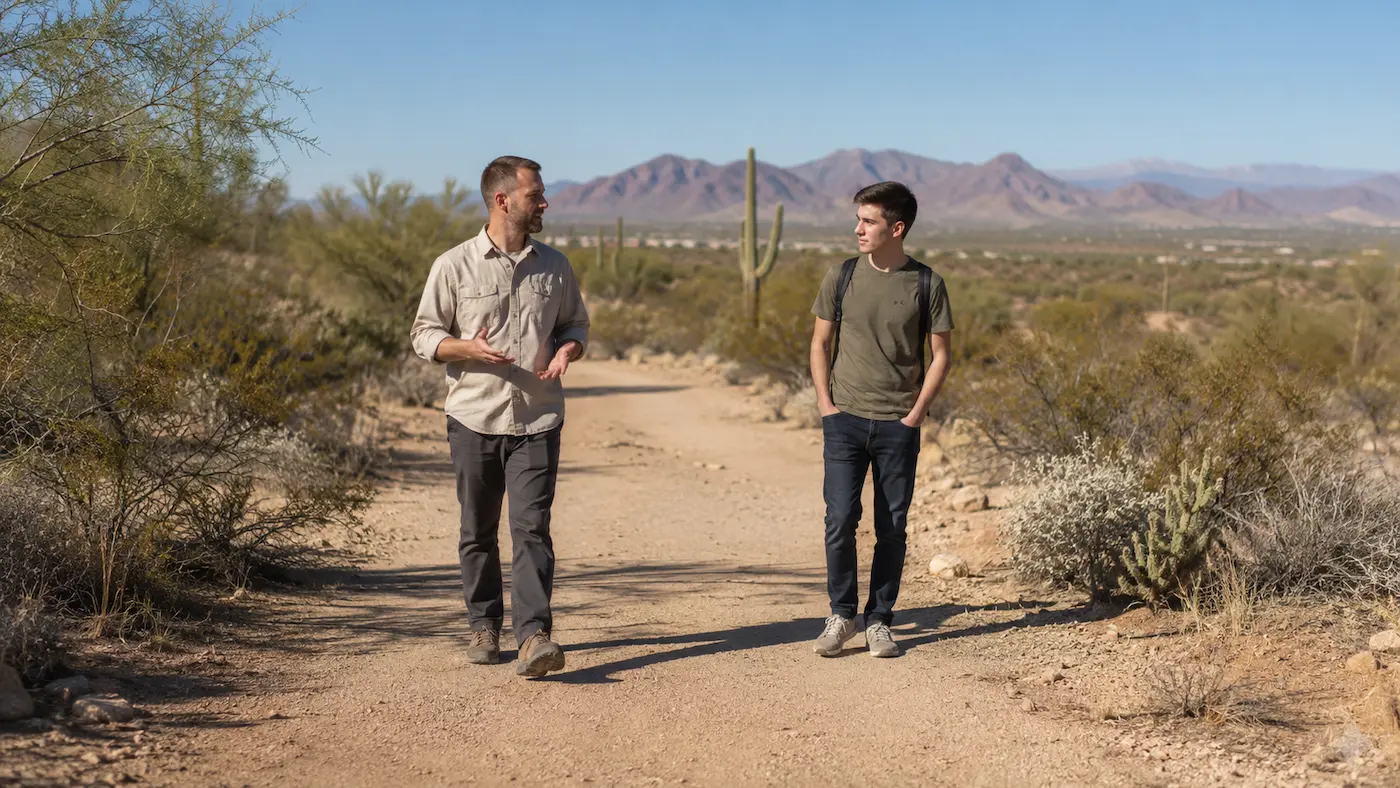
For some people, walking side by side feels less pressured than sitting face-to-face. Gentle movement can make difficult conversations feel more manageable. Natural surroundings can also provide something steady to return to when emotions feel intense or difficult to name.
The natural environment is not simply a backdrop. The pace of a walk, the rhythm of breathing, the temperature of the air, the sound of the surroundings, and the feeling of your body moving through space can all become part of the therapeutic process.
When Life Starts to Feel Too Tight
Many people begin therapy after spending a long time trying to handle everything on their own.
You may appear capable and high-functioning while feeling exhausted underneath. You might continue meeting the demands of work, family, relationships, and daily life while noticing that part of you feels tense, distant, shut down, restless, or constantly prepared for something to go wrong.
Outdoor counseling may be a good fit when you:
Feel disconnected from your body or emotions
Spend a lot of time overthinking or anticipating problems
Have experienced trauma, grief, loss, or chronic stress
Feel restless, anxious, numb, overwhelmed, or burned out
Feel uncomfortable in a traditional therapy office
Find that walking, nature, or open spaces help you feel more present
Understand your patterns intellectually but struggle to change how they feel
Want support navigating a major life transition or relationship concern
Healing does not always begin with finding the perfect words. Sometimes it begins by noticing your breath, feeling your feet against the ground, or realizing that you do not have to hold everything quite so tightly.
What Is Outdoor Therapy?
Outdoor therapy is professional counseling conducted in an outdoor setting rather than exclusively inside an office or over video.
It may include walk-and-talk therapy, sitting together in nature, mindfulness exercises, grounding practices, trauma-informed counseling, reflective conversation, or EMDR-informed work. The structure depends on your needs, treatment goals, physical comfort, and preferences.
Outdoor therapy is still therapy. It includes clear boundaries, intentional treatment goals, privacy-conscious planning, and thoughtful clinical support. What changes is the setting and the way the work can unfold.
For some people, walking side by side feels less pressured than sitting face-to-face. Gentle movement can make difficult conversations feel more manageable. Natural surroundings can also provide something steady to return to when emotions feel intense or difficult to name.
The natural environment is not simply a backdrop. The pace of a walk, the rhythm of breathing, the temperature of the air, the sound of the surroundings, and the feeling of your body moving through space can all become part of the therapeutic process.
Outdoor counseling may help you move from:
“I understand this in my head.”
toward:
“I am beginning to feel this differently in my body.”
When Life Starts to Feel Too Tight
Many people begin therapy after spending a long time trying to handle everything on their own.
You may appear capable and high-functioning while feeling exhausted underneath. You might continue meeting the demands of work, family, relationships, and daily life while noticing that part of you feels tense, distant, shut down, restless, or constantly prepared for something to go wrong.
Outdoor counseling may be a good fit when you:
Feel disconnected from your body or emotions
Spend a lot of time overthinking or anticipating problems
Have experienced trauma, grief, loss, or chronic stress
Feel restless, anxious, numb, overwhelmed, or burned out
Feel uncomfortable in a traditional therapy office
Find that walking, nature, or open spaces help you feel more present
Understand your patterns intellectually but struggle to change how they feel
Want support navigating a major life transition or relationship concern
Healing does not always begin with finding the perfect words. Sometimes it begins by noticing your breath, feeling your feet against the ground, or realizing that you do not have to hold everything quite so tightly.
What Is Outdoor Therapy?
Outdoor therapy is professional counseling conducted in an outdoor setting rather than exclusively inside an office or over video.
It may include walk-and-talk therapy, sitting together in nature, mindfulness exercises, grounding practices, trauma-informed counseling, reflective conversation, or EMDR-informed work. The structure depends on your needs, treatment goals, physical comfort, and preferences.
Outdoor therapy is still therapy. It includes clear boundaries, intentional treatment goals, privacy-conscious planning, and thoughtful clinical support. What changes is the setting and the way the work can unfold.
For some people, walking side by side feels less pressured than sitting face-to-face. Gentle movement can make difficult conversations feel more manageable. Natural surroundings can also provide something steady to return to when emotions feel intense or difficult to name.
The natural environment is not simply a backdrop. The pace of a walk, the rhythm of breathing, the temperature of the air, the sound of the surroundings, and the feeling of your body moving through space can all become part of the therapeutic process.
When Life Starts to Feel Too Tight
Many people begin therapy after spending a long time trying to handle everything on their own.
You may appear capable and high-functioning while feeling exhausted underneath. You might continue meeting the demands of work, family, relationships, and daily life while noticing that part of you feels tense, distant, shut down, restless, or constantly prepared for something to go wrong.
Outdoor counseling may be a good fit when you:
Feel disconnected from your body or emotions
Spend a lot of time overthinking or anticipating problems
Have experienced trauma, grief, loss, or chronic stress
Feel restless, anxious, numb, overwhelmed, or burned out
Feel uncomfortable in a traditional therapy office
Find that walking, nature, or open spaces help you feel more present
Understand your patterns intellectually but struggle to change how they feel
Want support navigating a major life transition or relationship concern
Healing does not always begin with finding the perfect words. Sometimes it begins by noticing your breath, feeling your feet against the ground, or realizing that you do not have to hold everything quite so tightly.
What Is Outdoor Therapy?
Outdoor therapy is professional counseling conducted in an outdoor setting rather than exclusively inside an office or over video.
It may include walk-and-talk therapy, sitting together in nature, mindfulness exercises, grounding practices, trauma-informed counseling, reflective conversation, or EMDR-informed work. The structure depends on your needs, treatment goals, physical comfort, and preferences.
Outdoor therapy is still therapy. It includes clear boundaries, intentional treatment goals, privacy-conscious planning, and thoughtful clinical support. What changes is the setting and the way the work can unfold.
For some people, walking side by side feels less pressured than sitting face-to-face. Gentle movement can make difficult conversations feel more manageable. Natural surroundings can also provide something steady to return to when emotions feel intense or difficult to name.
The natural environment is not simply a backdrop. The pace of a walk, the rhythm of breathing, the temperature of the air, the sound of the surroundings, and the feeling of your body moving through space can all become part of the therapeutic process.
Outdoor counseling may help you move from:
“I understand this in my head.”
toward:
“I am beginning to feel this differently in my body.”
Why Outdoor Therapy Can Feel Different
Trauma and chronic stress do not only affect your thoughts. They can also influence your breathing, muscle tension, sleep, attention, relationships, emotional reactions, and ability to feel safe or present.
Being outdoors can create more room to notice these experiences without immediately needing to explain or fix them.
Movement may provide an outlet for restlessness. Walking side by side may reduce the pressure of direct eye contact. Natural surroundings can offer grounding when emotions feel big, distant, or difficult to put into words.
For some people, simply being outside makes it easier to breathe, reflect, and remain present. For others, the combination of movement and conversation helps them approach topics that once felt too intense in a traditional office.
The purpose is not to suggest that nature alone will resolve what you are experiencing. The outdoor setting becomes one part of a thoughtful, collaborative therapeutic process.

Why Outdoor Therapy Can Feel Different
Trauma and chronic stress do not only affect your thoughts. They can also influence your breathing, muscle tension, sleep, attention, relationships, emotional reactions, and ability to feel safe or present.
Being outdoors can create more room to notice these experiences without immediately needing to explain or fix them.
Movement may provide an outlet for restlessness. Walking side by side may reduce the pressure of direct eye contact. Natural surroundings can offer grounding when emotions feel big, distant, or difficult to put into words.
For some people, simply being outside makes it easier to breathe, reflect, and remain present. For others, the combination of movement and conversation helps them approach topics that once felt too intense in a traditional office.
The purpose is not to suggest that nature alone will resolve what you are experiencing. The outdoor setting becomes one part of a thoughtful, collaborative therapeutic process.
You do not need to know exactly what outdoor therapy should look like before reaching out. We can talk about what feels comfortable and whether this approach may fit your needs.
Curious what a walk-and-talk session actually looks like? Read more here.
How Outdoor Therapy May Help
During outdoor therapy, you may begin noticing patterns that once felt automatic, such as:
Shutting down during conflict
People-pleasing to avoid rejection
Staying constantly busy
Avoiding difficult emotions
Scanning for danger or signs that something is wrong
Feeling responsible for everyone around you
Disconnecting from your own needs
Becoming overwhelmed when you try to slow down
Together, we can explore these patterns with curiosity and compassion.
Many coping responses developed for understandable reasons. They may have helped you stay connected, protect yourself, or make it through something difficult. But responses that once helped you survive can eventually make it harder to feel free, grounded, or fully yourself.

Outdoor therapy may help you:
Recognize how stress and trauma appear in your body
Practice grounding and emotional regulation in real time
Explore difficult experiences without rushing the process
Develop more choice in how you respond to triggers
Reconnect with your values, strength, and sense of direction
Build a steadier relationship with uncomfortable emotions
Feel more connected to yourself and the present moment
Experiment with new ways of responding to relationships and stress
For some clients, nature-based therapy becomes their primary setting for counseling. Others combine outdoor sessions with online therapy, mindfulness, EMDR-informed work, or other trauma-informed approaches.
Walk-and-Talk Therapy in Phoenix
Walk-and-talk therapy is one form of outdoor counseling in which the therapist and client walk side by side during the session.
The pace does not need to be fast or physically demanding. Walking may be gentle, and sessions can include pauses or time spent sitting. The purpose is therapy—not exercise, athletic performance, or completing a particular distance.
Walking side by side can make conversation feel more natural for people who feel uncomfortable sitting face-to-face. Movement may also provide an outlet for restlessness and help some clients stay present while discussing difficult subjects.
You do not need to be an experienced hiker or especially outdoorsy. We can discuss accessibility, physical limitations, weather, preferred pace, and other needs before meeting.
Outdoor therapy can also take place while sitting in a natural setting. Walking is an option, not a requirement.
Outdoor Therapy for Trauma and Anxiety
Outdoor therapy may be particularly helpful for adults experiencing trauma-related symptoms, anxiety, chronic stress, burnout, emotional disconnection, or difficulty slowing down.
Trauma therapy does not always require beginning with a detailed retelling of what happened. Early work may focus on building stability, recognizing your reactions, strengthening internal resources, and learning how to remain present without becoming overwhelmed.
Outdoor surroundings can provide concrete points of orientation: the ground beneath you, nearby sounds, changes in temperature, the rhythm of walking, or the feeling of air moving across your skin. These experiences can be incorporated into grounding and mindfulness practices during a session.
When clinically appropriate, outdoor counseling may also include EMDR-informed strategies or preparation for more structured EMDR therapy.
The work is paced carefully. You will not be expected to force yourself into painful material before you have enough support and steadiness to approach it.

Walk-and-Talk Therapy in Phoenix
Walk-and-talk therapy is one form of outdoor counseling in which the therapist and client walk side by side during the session.
The pace does not need to be fast or physically demanding. Walking may be gentle, and sessions can include pauses or time spent sitting. The purpose is therapy—not exercise, athletic performance, or completing a particular distance.
Walking side by side can make conversation feel more natural for people who feel uncomfortable sitting face-to-face. Movement may also provide an outlet for restlessness and help some clients stay present while discussing difficult subjects.
You do not need to be an experienced hiker or especially outdoorsy. We can discuss accessibility, physical limitations, weather, preferred pace, and other needs before meeting.
Outdoor therapy can also take place while sitting in a natural setting. Walking is an option, not a requirement.
Outdoor Therapy for Trauma and Anxiety
Outdoor therapy may be particularly helpful for adults experiencing trauma-related symptoms, anxiety, chronic stress, burnout, emotional disconnection, or difficulty slowing down.
Trauma therapy does not always require beginning with a detailed retelling of what happened. Early work may focus on building stability, recognizing your reactions, strengthening internal resources, and learning how to remain present without becoming overwhelmed.
Outdoor surroundings can provide concrete points of orientation: the ground beneath you, nearby sounds, changes in temperature, the rhythm of walking, or the feeling of air moving across your skin. These experiences can be incorporated into grounding and mindfulness practices during a session.
When clinically appropriate, outdoor counseling may also include EMDR-informed strategies or preparation for more structured EMDR therapy.
The work is paced carefully. You will not be expected to force yourself into painful material before you have enough support and steadiness to approach it.
Therapy Does Not Have to Feel Confined
Outdoor sessions can offer a different pace and setting while still providing thoughtful, professional, trauma-informed care.
My Approach to Nature-Based Counseling
My approach is trauma-informed, relational, collaborative, and grounded in respect for your pace.
I do not believe healing comes from forcing yourself to revisit painful experiences before you are ready. I also do not believe therapy needs to feel cold or overly clinical to be effective.
During outdoor sessions, we may walk, pause, sit, observe the environment, or use mindfulness-based practices. We may explore what is happening in your life, identify repeating patterns, practice regulation skills, or use EMDR-informed tools when appropriate.
You do not need to know exactly what you need before you arrive.
For many clients, the early work involves developing:
Enough safety to approach what has been avoided
Enough clarity to understand what keeps repeating
Enough self-compassion to view old coping patterns differently
Enough trust to experiment with something new
You can expect therapy to be honest, steady, and compassionate. We will pay attention to your goals, your nervous system, your lived experience, and what helps you feel grounded enough to continue the work.
The process is collaborative. Your reactions, preferences, boundaries, and consent matter throughout therapy.

Privacy During Outdoor Therapy
Because outdoor therapy takes place outside a traditional office, privacy is discussed thoughtfully before sessions begin.
We will talk about:
Potential outdoor locations
What to do if we encounter another person
How we will protect your personal information
Weather and environmental conditions
Physical accessibility and comfort
Alternatives when an outdoor session is not appropriate
Complete privacy cannot be guaranteed in a public outdoor environment. You will have an opportunity to consider the benefits and limitations before choosing this format, and your consent matters throughout the process.
When outdoor therapy is not the right fit for a particular session, online counseling may be available. The goal is to choose the setting that best supports your care rather than forcing one format.
Outdoor Therapy in Phoenix and the North Valley
Echo Canyon Therapy provides outdoor therapy in Phoenix, AZ and the North Valley.
Specific meeting locations are discussed privately after we determine that outdoor counseling is an appropriate fit. This protects client privacy and allows us to consider accessibility, travel, weather, physical comfort, and the kind of environment that may best support the session.
Online therapy is also available for clients located throughout Arizona.
My Approach to Nature-Based Counseling
My approach is trauma-informed, relational, collaborative, and grounded in respect for your pace.
I do not believe healing comes from forcing yourself to revisit painful experiences before you are ready. I also do not believe therapy needs to feel cold or overly clinical to be effective.
During outdoor sessions, we may walk, pause, sit, observe the environment, or use mindfulness-based practices. We may explore what is happening in your life, identify repeating patterns, practice regulation skills, or use EMDR-informed tools when appropriate.
You do not need to know exactly what you need before you arrive.
For many clients, the early work involves developing:
Enough safety to approach what has been avoided
Enough clarity to understand what keeps repeating
Enough self-compassion to view old coping patterns differently
Enough trust to experiment with something new
You can expect therapy to be honest, steady, and compassionate. We will pay attention to your goals, your nervous system, your lived experience, and what helps you feel grounded enough to continue the work.
The process is collaborative. Your reactions, preferences, boundaries, and consent matter throughout therapy.
Privacy During Outdoor Therapy
Because outdoor therapy takes place outside a traditional office, privacy is discussed thoughtfully before sessions begin.
We will talk about:
Potential outdoor locations
What to do if we encounter another person
How we will protect your personal information
Weather and environmental conditions
Physical accessibility and comfort
Alternatives when an outdoor session is not appropriate
Complete privacy cannot be guaranteed in a public outdoor environment. You will have an opportunity to consider the benefits and limitations before choosing this format, and your consent matters throughout the process.
When outdoor therapy is not the right fit for a particular session, online counseling may be available. The goal is to choose the setting that best supports your care rather than forcing one format.
Outdoor Therapy in Phoenix and the North Valley
Echo Canyon Therapy provides outdoor therapy in Phoenix, AZ and the North Valley.
Specific meeting locations are discussed privately after we determine that outdoor counseling is an appropriate fit. This protects client privacy and allows us to consider accessibility, travel, weather, physical comfort, and the kind of environment that may best support the session.
Online therapy is also available for clients located throughout Arizona.
Contact Echo Canyon Therapy
Frequently Asked Questions
Frequently Asked Questions
Related Articles
Explore reflections and practical guidance on outdoor therapy, mindfulness, trauma-informed care, and feeling more present.

Related Articles
Explore reflections and practical guidance on outdoor therapy, mindfulness, trauma-informed care, and feeling more present.
Begin Outdoor Therapy in Phoenix
You do not need to decide everything before reaching out.
A free consultation gives us an opportunity to discuss what you are experiencing, what you hope will change, and whether outdoor therapy feels like the right fit. We can also talk through location, privacy, accessibility, and what an initial session might look like.
Sometimes healing begins with a conversation. Sometimes it begins with movement, open space, and the experience of no longer having to carry everything alone.
Schedule a Free Consultation
Begin Outdoor Therapy in Phoenix
You do not need to decide everything before reaching out.
A free consultation gives us an opportunity to discuss what you are experiencing, what you hope will change, and whether outdoor therapy feels like the right fit. We can also talk through location, privacy, accessibility, and what an initial session might look like.
Sometimes healing begins with a conversation. Sometimes it begins with movement, open space, and the experience of no longer having to carry everything alone.
Schedule a Free Consultation